A listed mining company’s investor website needs seven things: the share price and structure, the news releases and filings, the corporate presentation, a page for each project with its maps and numbers, the management and board, the company’s record on environment, community and governance, and a way to contact investor relations or sign up for news. It has to load fast on a phone, date what it publishes, and follow the same disclosure rules as a news release.
Most of all, it has to answer an investor’s first questions on the first screen, before they decide whether to read on.
What an investor checks in the first minute
An investor arrives from a news release, a search or a mention, and is checking three things: what the company owns, what it has found and what it has filed. The first screen should answer all three without a PDF.
- What you own. The projects, where they are and what stage they are at, on a map.
- What you have found. The latest results and resources, stated as your qualified person approved them.
- What you have filed. The latest news release and the route to the filings, each dated.
- How to follow you. A sign-up for news that a visitor does not have to hunt for.
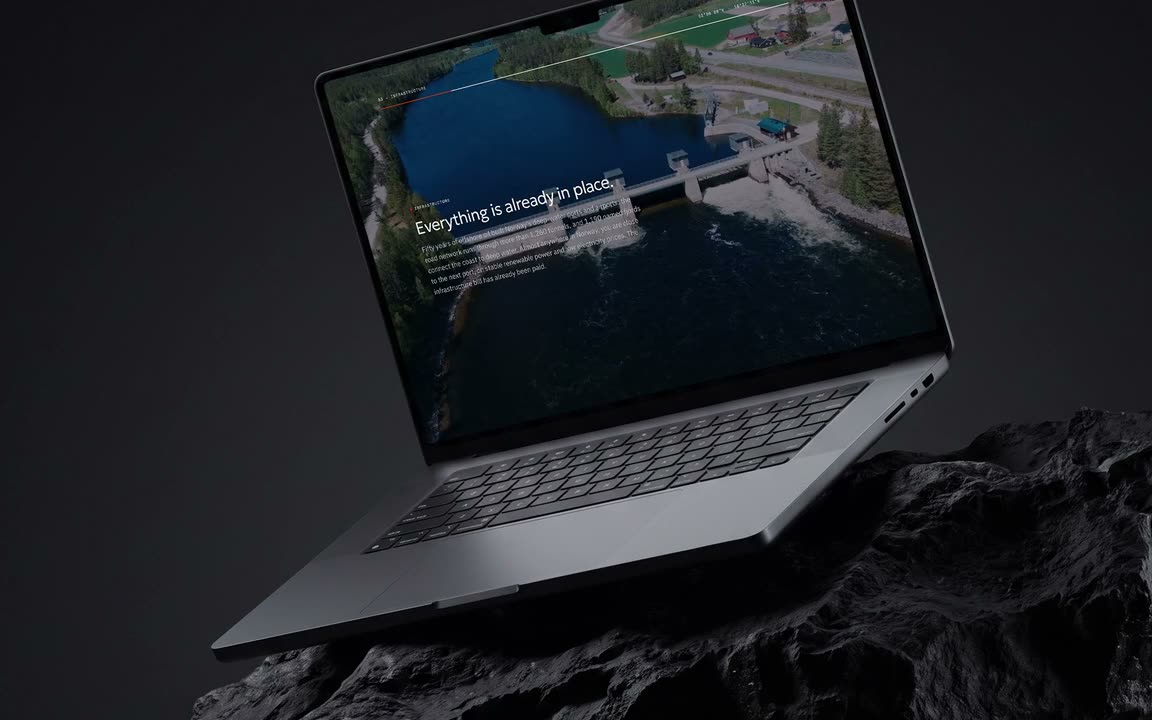
On the Teako Minerals site the project portfolio runs from a map of Norway to the main projects and down to a dossier for a single project, so an investor can go as deep as they like without leaving the page for a PDF.
The seven must-have sections
- Share price and structure. The symbol on each exchange, a current or delayed price, the shares outstanding, options and warrants, and the major holders where they are disclosed. On the Teako site the investor and portfolio hub shows the register, the structure and the catalysts ahead as motion, where most companies keep them on a slide in a PDF.
- News releases and filings. Every release, dated and newest first, with a link to the company’s filings. Canada’s National Policy 51-201 asks companies to post on their website, at the same time, the documents they file on SEDAR+.
- Presentations and supporting material. The current corporate presentation, and any fact sheet or data the company gives analysts and institutions. The same policy asks for those on the investor section too, so that no investor knows more than another.
- Project pages. One page for each material project: where it is and how to reach it, the geology in plain words, results and resources with their categories, the technical report, and what happens next. The maps should work by touch.
- Management and board. Who runs the company and what they have done before, with photographs. Investors in an explorer are backing people as much as rock.
- Environment, community and governance. Permits, the relationships with communities near the project, the board’s committees and the policies that matter. A company that explains its licence to operate is easier to back than one that leaves it out.
- Investor contact and sign-up. A named contact, an email address and a phone number, and an email list. The list is the one audience the company owns outright.
Speed and mobile
Investors increasingly find companies through feeds as well as through brokers. In the Canadian Securities Administrators’ 2024 Investor Index, 53 per cent of investors said they use social media for investment information, and a link in a feed is often opened on a phone. A site built for a desktop and a folder of PDFs loses that reader on the first screen.
- Words and numbers in the page. The key figures are text on the page, not pictures or PDFs, so they load fast, read on a phone and can be found by search engines.
- PDFs as the archive, not the page. Technical reports and filings stay as PDFs, linked. The summary investors read is a web page.
- Maps that work by touch. Pinch, tap and scroll, with the labels readable at phone size.
- Publishing in minutes. A release that is on the wire and not on your website is a gap an investor notices. Your own team should be able to post it without a developer.
- One system. The Teako Minerals site is built from 64 interactive web components drawn from one design system, so a new project page is assembled from parts that already exist and the hundredth page still looks like the first.
The website is disclosure
A mining company’s website is held to the same standard as its news releases. In Canada the main rules are these.
- Technical statements need a qualified person. National Instrument 43-101 names websites in its definition of written disclosure. Scientific and technical statements about a material project must be based on information prepared or approved by a qualified person, who is named. The instrument also bars some favourite lines, including the gross value of the metal in a deposit and a metal equivalent grade without the grade of each metal behind it.
- Forward-looking statements need their cautions. Under National Instrument 51-102 a company must have a reasonable basis for forward-looking information, and material forward-looking information must be identified as such, carry a caution that actual results may vary along with the material risk factors, and state the material assumptions behind it. A site that talks about a production date or a study outcome needs that language next to it, not three clicks away.
- Date everything, and keep an archive. National Policy 51-201 asks companies to date all material information when it is posted or changed, move outdated information to an archive, and explain how the site is maintained. It also reminds them that posting on a website is not, by itself, enough to make information public: the news release comes first.
- No chat rooms, and care with links. The same policy says a company should not take part in, host or link to chat rooms or bulletin boards, and that if it posts the names of the analysts who cover it, it should post all of them.
Other exchanges add their own. AIM Rule 26 requires an AIM company to keep set information on its website from admission, including its business, its significant shareholders and its announcements, with the date it was last updated. ASX companies report exploration results under the JORC Code. These are the rules as we read them on 12 November 2026. Check the exchange’s current rules and your advisers.
Five common mistakes
- The newswire template. A site that came with the news distribution package looks like every other company on the exchange.
- The filing cabinet. An investor has to open three PDFs to find out what the company owns.
- The stale share structure. Options, warrants and the register from two financings ago tell an investor nobody is minding the site.
- Undated news. Without dates an investor cannot tell this year’s results from last year’s, and the disclosure policy asks for them anyway.
- Claims nobody approved. A headline grade or a comparison to a neighbouring mine on the home page, with no qualified person behind it.
How we build them
We design and build investor websites for explorers, developers and producers, with the projects, the results and the filings first and the qualified person’s review built into the steps your team follows to publish. The work is on our mining website design page, and the Teako Minerals site is shown screen by screen in its case study.
If your site was built for a different company than the one you are now, book a call and we will walk through what investors see on it today.
Questions
What should a mining company’s investor website include?
The share price and structure, the news releases and filings, the corporate presentation, a page for each material project with its maps and numbers, the management and board, the company’s approach to environment, community and governance, and an investor contact with a sign-up for news. All of it has to work on a phone.
Does NI 43-101 apply to a company’s website?
Yes. National Instrument 43-101 includes websites in its definition of written disclosure, so a technical statement on the site about a material project must be based on information prepared or approved by a qualified person, as it would be in a news release.
Is posting news on our website enough to disclose it?
No. National Policy 51-201 says posting on a website is not, by itself, enough to make material information generally disclosed. The news release goes out first, and the website carries it at the same time.
Do AIM companies have to have a website?
Yes. AIM Rule 26 requires an AIM company to keep specified information on a website from admission, including a description of its business, its significant shareholders, its announcements and its admission document, with the date the information was last updated.
How is an investor website different from a corporate website?
For a listed mining company they are usually the same site. The reader who matters most is doing due diligence, so the site is ordered by what an investor checks, and everything else follows from that.
- National Instrument 43-101, Standards of Disclosure for Mineral Projects (sections 1.1, 2.1, 2.3 and 3.1)
- National Instrument 51-102, Continuous Disclosure Obligations, sections 4A.2 and 4A.3 (BC consolidation, last amended 22 September 2026)
- National Policy 51-201, Disclosure Standards, sections 6.11 and 6.12
- Canadian Securities Administrators, 2024 Investor Index (27 June 2024)
- London Stock Exchange, AIM Rules for Companies (August 2026, effective 5 August 2026): rules 1, 2, 3, 7 and 26, and Schedule Two
- ASX Listing Rules, Chapter 5, Additional reporting on mining and oil and gas activities (rules 5.3 and 5.6)
This article describes the rules and figures in general terms, as we read them on 12 November 2026. It is not legal, financial or securities advice. Check the exchange’s current rules and your advisers before you act on it.